1. Introduction
Cutting carbon emissions directly contributes to sustainable development goals and slows global warming:
- Improved quality of life and fewer respiratory ailments due to cleaner air; a stable climate; and food and water security for populations that are more susceptible.
- Green Growth ➝ Innovation and employment generation in low-carbon sectors.
- Carbon reduction involves social and economic change in addition to ecological change.
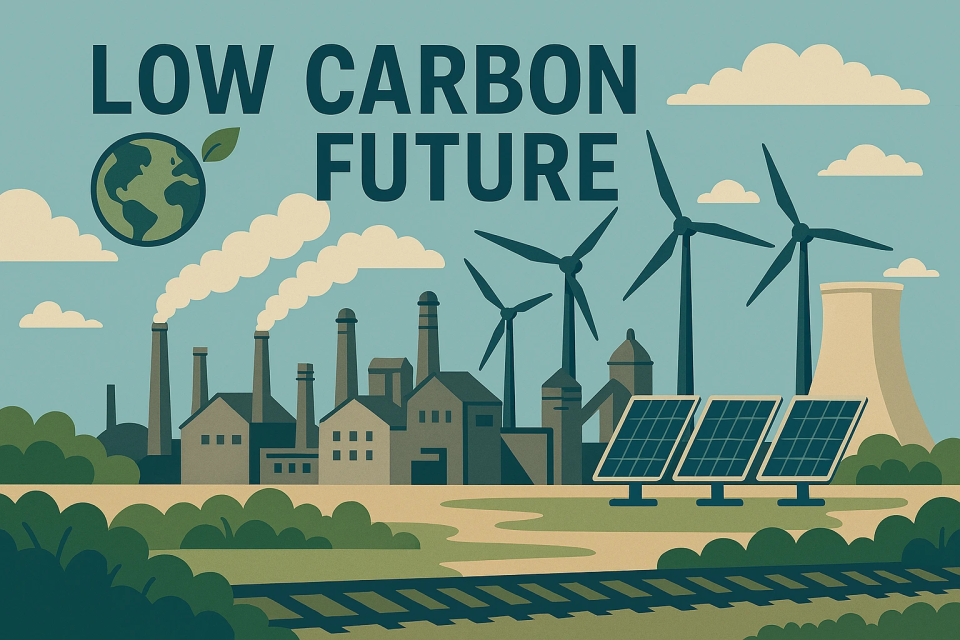
A low-carbon economy uses renewable energy (solar, wind, nuclear, and hydrogen) to reduce greenhouse gas emissions across sectors like: Clean Industry (effective procedures, monitoring of emissions). Reuse, recycling, and waste removal are examples of circular practices. Climate Reporting (open data for responsibility). This change is being fueled in the UAE by investments in CCUS and green hydrogen as well as digital tools like SustainOS.
2. What is a Low-Carbon Future?
In order to combat climate change and maintain the health of the planet, a low-carbon future aims to drastically reduce greenhouse gas emissions. It demands a revolution in the management, production, and consumption of energy in all spheres of society. It focuses on radically rethinking economic systems to function within environmental bounds rather than merely compensating emissions.
⚙️ Core Principles Driving the Shift
Three interrelated pillars are essential to the shift to a low-carbon future:
- Reducing Dependency on Fossil Fuels: replacing the main sources of carbon emissions, coal, oil, and natural gas, with cleaner alternatives over time.
- Enhancing Energy Efficiency: modernizing systems and technologies to use less energy for the same results-in buildings, transportation, and industries.
- Using Sustainable Energy Sources: increasing the use of renewable energy sources like solar, wind, nuclear, and green hydrogen in order to reduce emissions and satisfy rising demand.
When combined, these ideas reduce operating expenses, encourage technological innovation, and quicken the process of decarbonization.
🏛️ Why It Matters for All Sectors
A low-carbon future isn't just a climate imperative-it's a strategic opportunity for:
|
| Industries | Boosts competitiveness through innovation and resource efficiency |
| Governments | Strengthens energy security, reduces climate risk, aligns with global targets |
| Communities | Protects public health, lowers living costs, fosters climate resilience |
Platforms like SustainOS and national initiatives like Net Zero by 2050 show how data-driven policymaking and cross-sector cooperation can make this future attainable in the United Arab Emirates.
3. What is the Transition to a Low-Carbon Future?
The world's energy landscape is changing as a result of the shift to renewable energy. As countries look for cleaner, more sustainable alternatives, solar, wind, and green hydrogen are replacing conventional fossil-based systems like coal, oil, and gas.
Because of their scalability and declining costs,
- Solar and wind energy now account for the majority of new energy investments.Green hydrogen powers hard-to-abate industries like shipping and heavy industry.
- Hydrogen hubs and massive solar projects are essential to the UAE's efforts to achieve Net Zero .
🔧 Technology Enablers: Carbon Management & Green Systems
Decarbonization is accelerated by three levers:
- Carbon Management: While AI systems (like SustainOS) track and report emissions in real time, solutions such as CCS/CCUS capture emissions.
- Tools for the Energy Transition: Digital platforms minimize industrial footprints and maximize energy use.
- Green Technologies: Clean energy is integrated into various systems through smart grids, battery storage, and electrified transportation.
When combined, they allow for emissions reductions without sacrificing industrial growth.
🏛️ Policy Backbone: Global Agreements & National Mandates
Climate targets are codified through international and domestic policies:
|
| Paris Agreement 🇺🇳 | Limit global warming below 2°C |
| Net Zero 2050 | Achieve carbon neutrality by mid-century |
| UAE Climate Decree 2024 | Enforce emissions reporting and climate disclosures |
| COP Frameworks | Guide climate finance, adaptation, and mitigation |
These frameworks align global efforts, boost innovation, and ensure accountability.
4. Pathways to the Low-Carbon Future
More than just ambition is needed to reach Net Zero by 2050; coordinated action across supply chains, industrial processes, and energy systems is needed. Here's how countries, like the UAE, are determining the path:
⚡ 1. Renewable Energy Adoption
It is fundamental to replace fossil fuels with hydro, wind, and solar energy.
- Solar:Large-scale deployment demonstrated by the UAE's flagship projects, such as Mohammed bin Rashid Al Maktoum Solar Park.
- Wind and Hydro:Increasing grid stability through diversification with wind corridors and regional hydro imports.
This shift creates energy security and green jobs while lowering carbon intensity.
🚗 2. Electrification & Green Hydrogen
Decarbonizing high-emitting sectors demands clean molecules and electrons:
- Transportation:Road emissions are reduced by electric vehicles (EVs) and electrified logistics.
- Heavy Industry:Green hydrogen, created by electrolysis, fuels the production of steel, cement, and chemicals without the need for fossil fuels.
The UAE's Hydrogen Leadership Roadmap encourages both export and domestic growth.
🏭 3. Carbon Capture & Storage (CCS)
CCS is essential for industries like steel, cement, and refining in order to reduce residual emissions:
- Technologies such as geological storage and point-source capture are becoming more popular.
- In order to scale clean solutions while preserving economic viability, UAE operators are testing CCUS.
🧠 4. Energy Efficiency & Digital Solutions
Cleaner outputs are the result of smarter operations:
- Digital twins optimize asset performance and simulate energy flows.
- Demand-side management is streamlined and waste is decreased with AI and automation.
Platforms for real-time analytics, like SustainOS, increase the precision of emissions reporting.
🔄 5. Circular Economy
Resource stewardship is more important to a low-carbon future than energy alone:
- Reuse, recycling, and sustainable design reduce waste.
- Ecosystem repair, plastics recycling, and circular construction are all encouraged in emirates like Abu Dhabi.
Carbon savings are integrated into product life cycles through circularity.
🔗 6. Supply Chain Decarbonization
One significant issue is scope 3 emissions, or indirect emissions from suppliers:
- Businesses are using sustainable procurement practices to interact with green suppliers.
- Transparent emissions disclosures are supported throughout the chain by blockchain-enabled tracking.
Manufacturers in the UAE can access international green markets by adhering to these standards.
5. Role of Technology in Enabling a Low-Carbon Future
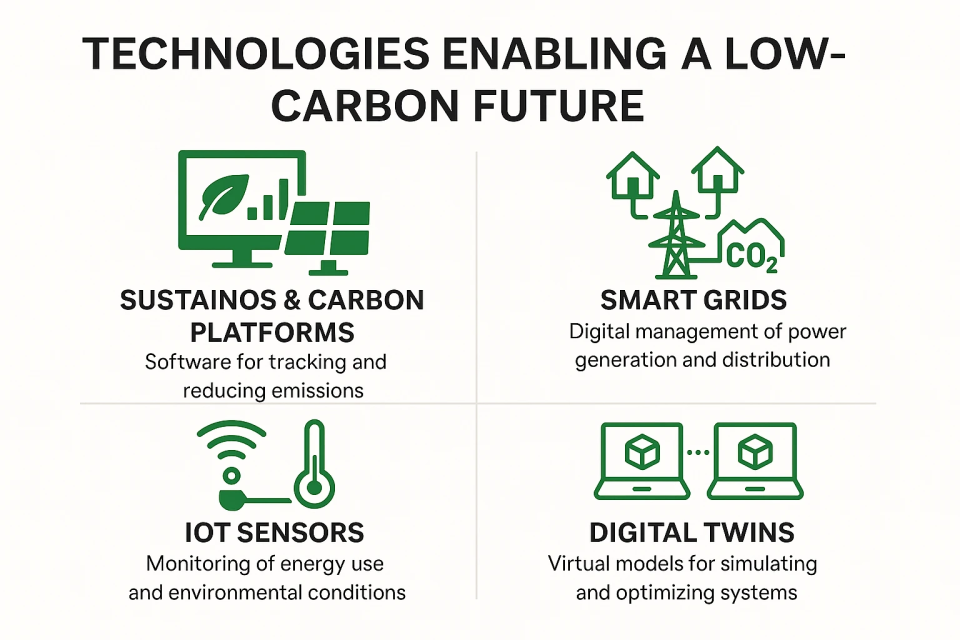
Digital technologies are becoming vital facilitators of low-carbon transformation as industries strive for Net Zero . The way emissions are monitored, decreased, and reported is changing as a result of technologies like carbon management platforms, AI-driven analytics, and predictive modeling.
|
| 🟦 SustainOS & Carbon Platforms | Real-time emissions tracking, automated reporting, scenario modeling |
| ⚡ Smart Grids | Balance energy demand/supply, integrate renewables, reduce grid emissions |
| 📡 IoT Sensors | Monitor energy use, equipment performance, and emissions at granular levels |
| 🧪 Digital Twins | Simulate operations, optimize energy flows, test low-carbon strategies virtually |
📊 Why Real-Time Monitoring Matters
- 🔍 Detect inefficiencies and emission hotspots
- 📈 Enable data-driven decisions and dynamic adjustments
- ✅ Track progress toward Net Zero targets
- 🗣️ Support transparent reporting and stakeholder engagement
6. Challenges in the Transition to a Low-Carbon Future
A number of strategic and structural obstacles continue to impede progress as industries around the world race toward Net Zero targets, particularly in difficult-to-abate sectors. Designing robust, scalable solutions requires an understanding of these difficulties.
💰 High Capital Investment
- CCS and renewable energy come with high upfront costs.
- Prolonged ROI periods discourage adoption in the private sector.
- In emerging markets, financing gaps continue to exist.
🧱 Resistance in Hard-to-Abate Sectors
- Cement, steel, and oil & gas rely on carbon-intensive processes
- Workforce transitions encounter internal resistance
- Retrofitting is expensive and disruptive to operations
🌍 Global Policy & Innovation Gaps
- Fragmented climate policies hinder collaboration
- Lack of unified carbon pricing and reporting standards
- Limited tech transfer and R&D cooperation
7. Benefits of a Low-Carbon Future
|
| 🌍 Environmental | - Reduced greenhouse gas (GHG) emissions - Improved air and water quality - Protection of ecosystems and biodiversity |
| 💼 Economic | - Creation of green jobs in clean energy and tech sectors - Energy savings through efficiency and renewables - Long-term cost reductions and lower carbon liabilities |
| ❤️ Social | - Healthier communities with fewer pollution-related illnesses - Enhanced corporate reputation and stakeholder trust - Greater climate resilience and social equity |
8. Conclusion
A low-carbon future is essential for long-term growth, operational effectiveness, and climate resilience. Industries can meet regulatory objectives, foster innovation, and increase stakeholder trust by cutting emissions. Smart, scalable solutions are needed in the UAE to comply with the 2024 Climate Decree and Net Zero 2050.
Partner with Net Carbon Vision to accelerate your transition to a low-carbon future with AI-powered decarbonization solution that helps to:
- Track and reduce emissions in real time.
- Align with national climate targets.
- Drive efficiency through data-led insights.
Let's shape a cleaner, smarter future-together.