1. Introduction
The core of this change is the increasing differentiation between regulated carbon instruments, which are required by governments to enforce emissions reductions, and voluntary carbon instruments, which are used to show climate leadership. Navigating the changing terrain of carbon responsibility, where investor scrutiny, reputational risk, and compliance frameworks increasingly converge, requires an understanding of this divide.
2. What Is a Carbon Offset?
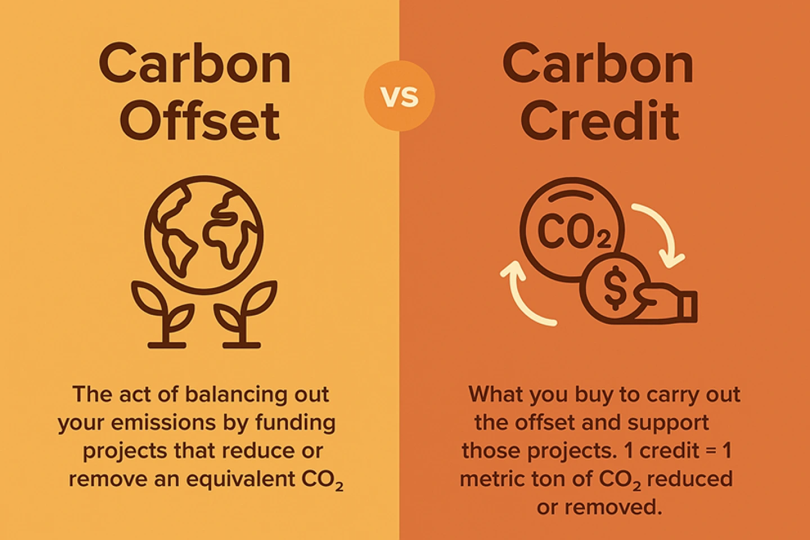
Carbon offsets have become a strategic tool for organizations looking to make up for inevitable emissions in the race to Net Zero . Offsets are voluntary mechanisms that bridge the gap between operational reality and ambition by enabling organizations to invest in projects that actively remove or reduce greenhouse gases (GHGs) from the atmosphere.
🔧 Types of Offset Projects
Carbon offset initiatives typically fall into two categories:
- Nature-Based Solutions:Projects that leverage ecosystems to absorb carbon, such as:
○ Reforestation and afforestation
○ Mangrove restoration
○ Soil carbon enhancement
- Engineered Solutions:Technology-driven interventions that prevent or capture emissions, including:
○ Renewable energy deployment (solar, wind)
○ Methane capture from landfills or agriculture
○ Direct air capture and carbon mineralization
Each project type contributes uniquely to climate mitigation, but their impact hinges on credibility and transparency.
✅ Why Certification Standards Matter
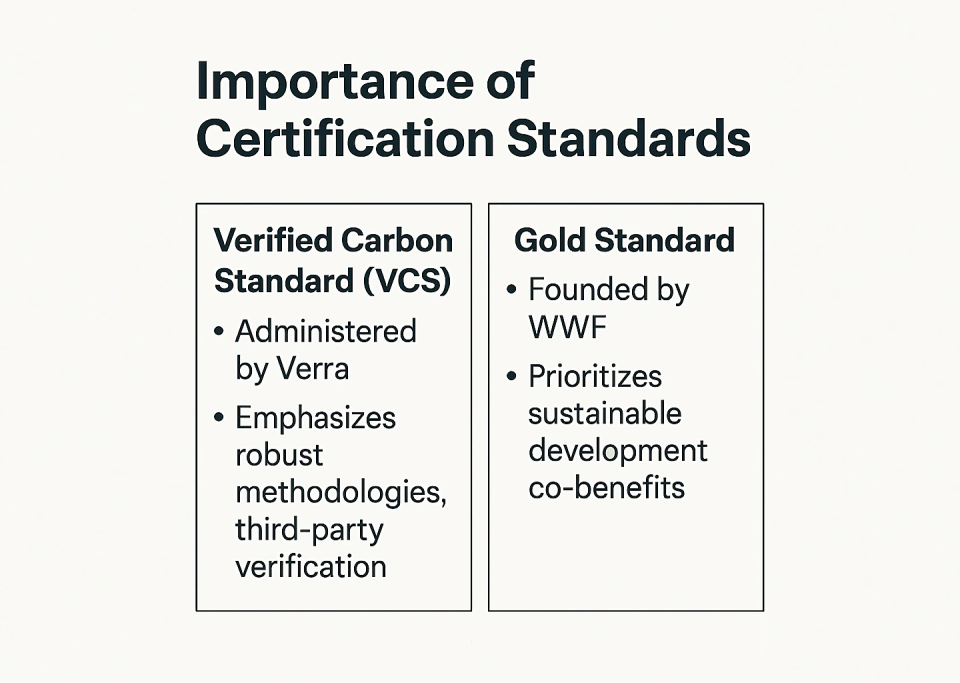
Not every offset is made equally. Projects must follow strict certification frameworks to guarantee stakeholder trust and environmental integrity. There are two internationally accepted standards:
3. What Is a Carbon Credit?
A carbon credit is a compliance tool that gives its holder the legal authority to emit one metric tonne of CO₂-equivalent emissions. These credits are essential to cap-and-trade markets, in which governments allocate allowances to regulated entities and establish an overall emissions cap. Compliance credits are required for organizations participating in emissions trading schemes (ETS), in contrast to voluntary offsets, which are bought to show climate responsibility. They allow for flexibility in how reductions are accomplished while ensuring that emissions remain within legally defined bounds.
⚙️ How the Mechanism Works
The basic yet effective idea behind the cap-and-trade system is this:
- Government Allocation:: Based on past emissions or sectoral benchmarks, authorities grant a restricted number of emissions permits to businesses.
- Trading Dynamics:: Businesses can sell extra credits if they emit fewer emissions than permitted. Those who go over their cap risk penalties or having to purchase credits to make up the difference.
As a result, there is a market-driven incentive to reduce emissions. While high emitters are pushed toward cleaner technologies or operational changes, efficient operators profit monetarily.
✅ Types of Carbon Credits: CERs, VERs & Beyond
The reduction or elimination of greenhouse gas emissions is represented by tradable certificates known as carbon credits. They assist businesses in reducing emissions and achieving sustainability objectives. The primary kinds are as follows:
- Emission reductions that are certified (CERs):CERs are issued under the Kyoto Protocol's Clean Development Mechanism (CDM) and originate from projects in developing nations (such as reforestation or renewable energy). Their primary purpose is to ensure adherence to global climate accords.
- Reductions in Voluntary Emissions (VERs):VERs, which are created outside of compliance markets, fund initiatives like community-based renewable energy and afforestation. They are voluntarily used by both individuals and businesses to improve brand sustainability or reach ESG goals.
- Additional Carbon Credits
○ The EU Emissions Trading System makes use of European Union Allowances, or EUAs.
○ Removal Credits: From initiatives that actively remove CO₂, such as biochar and carbon capture.
○ Renewable Energy Certificates (RECs) are evidence of the production of renewable energy but are not actual carbon credits.
Why It Matters: Emerging credits are associated with innovation in carbon removal, VERs with voluntary sustainability, and CERs with compliance. Businesses can choose the best route to net-zero by being aware of the differences.
4. Key Differences Between Carbon Offsets and Carbon Credits
|
| Purpose | Voluntary tool to compensate for emissions by funding GHG-reduction/removal projects | Compliance instrument used to meet regulatory emissions caps |
| Market Type | Voluntary carbon market | Regulated (compliance) carbon market |
| Issuer | Independent project developers; verified by standards like VCS, Gold Standard | Government or regulatory authority |
| Mechanism | Entities purchase offsets to neutralize emissions beyond legal requirements | Entities receive or buy credits to stay within legally mandated emission limits |
| Project Examples | Reforestation Renewable energy Methane capture | Emissions allowances under cap-and-trade systems |
| Verification Standards | Verified Carbon Standard (VCS) Gold Standard etc. | National or regional regulatory frameworks (e.g., EU ETS, UAE MRV systems) |
| Use Case in UAE | Corporate ESG strategies Voluntary climate leadership | Potential future integration into UAE's Net Zero compliance frameworks |
5. How Carbon Offset and Credit Markets Work
Knowing how carbon markets work is crucial as climate accountability becomes a key component of industrial strategy. These markets function according to two different frameworks: compliance and voluntary.
🟢 Voluntary Market
Carbon offset projects, like methane capture, renewable energy, or reforestation, produce credits that companies and individuals buy in the voluntary market to offset their emissions. Although not mandated by law, these purchases demonstrate brand positioning, ESG alignment, or climate leadership. Crucially, the offset projects are maintained by the money received from these transactions, allowing for long-term environmental impact and scalability. Credibility and transparency are guaranteed by standards such as VCS and Gold Standard.
- Market size and trend:: Rapidly expanding, driven by corporate Net Zero pledges and stakeholder pressure.
⚖️ Compliance Market
Cap-and-trade schemes, like the EU Emissions Trading System (EU ETS), regulate the compliance market. Governments assign credits (or allowances) to regulated entities and set emissions caps for specific sectors. A market-driven incentive to lower emissions is created when companies that exceed their cap are forced to purchase credits from those who have excess. By integrating carbon costs into operations, this system encourages efficiency and innovation in high-emitting sectors.
- Market size and trend:: Significantly larger in scale, with billions of dollars in annual transactions and growing regulatory coverage.
Voluntary markets are becoming more popular as the UAE moves closer to Net Zero 2050, but compliance frameworks might come next, particularly in industries that are difficult to regulate. Strategic carbon management requires an understanding of both systems.
6. NCV's Role: Carbon Offset & Credit Solutions
Organizations are under more and more pressure to manage offsets and credits precisely, transparently, and in accordance with regulations as carbon markets change. By providing a digital-first platform that streamlines and fortifies carbon management in both voluntary and compliance markets, NCV (Net Carbon Vault) tackles this issue.
🛠️ What NCV Offers
Through a number of integrated features, NCV helps businesses to optimize their carbon operations:
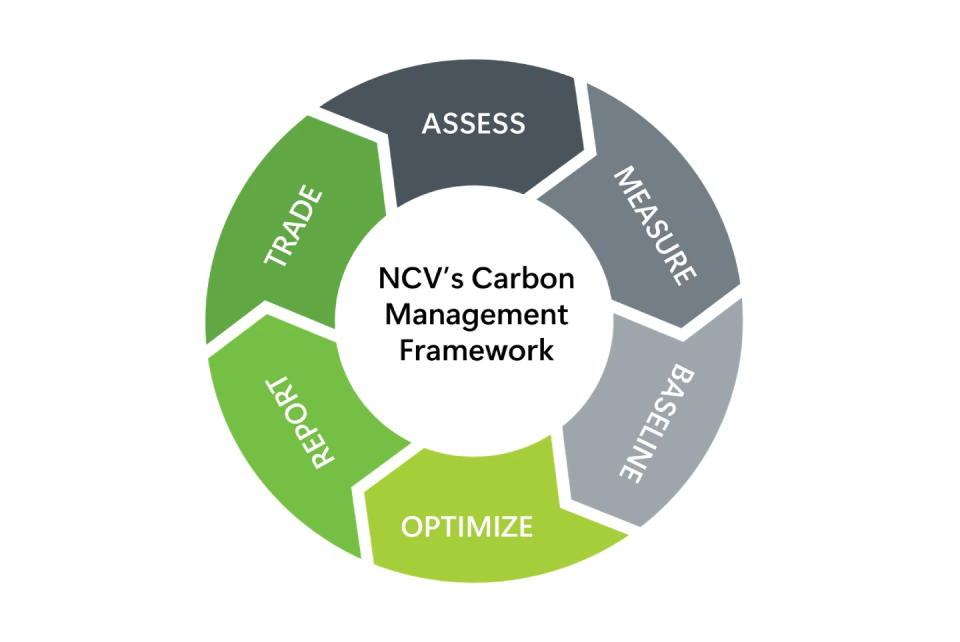
- Streamlined Transaction Processes: Easy-to-use interfaces that minimize transaction friction and administrative load for purchasing, selling, and retiring carbon credits.
- Platforms for Offset Generation and Verification: Project developers can use these tools to register, validate, and certify offset projects in accordance with established standards such as the Gold Standard and VCS.
- End-to-End Tracking: MRV integration and audit readiness are supported by real-time visibility into the credit lifecycle from issuance to retirement across both voluntary and regulated frameworks.
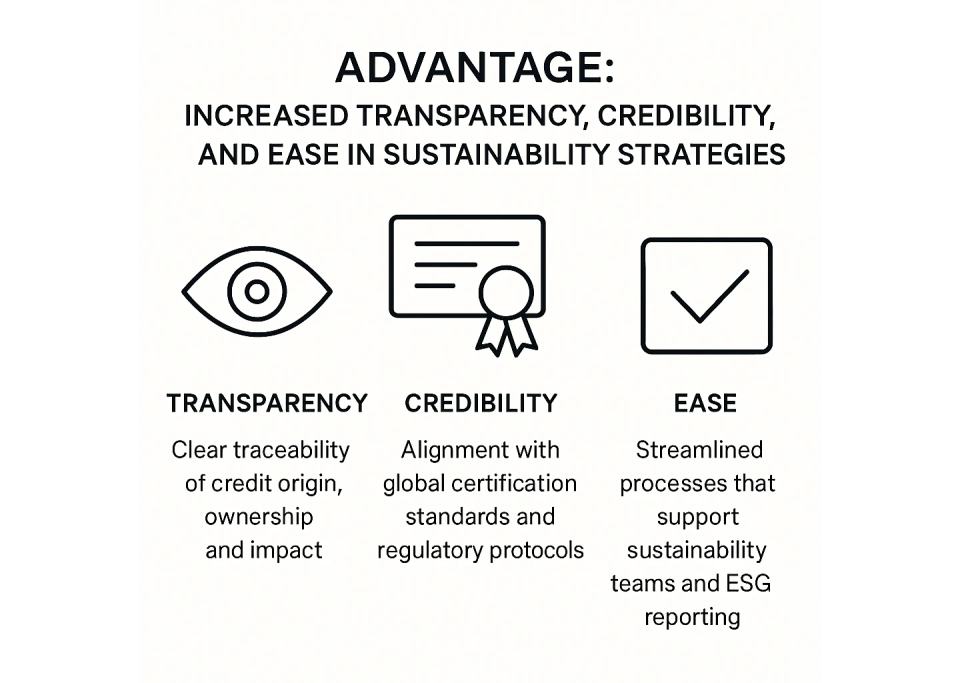
NCV provides a scalable solution to incorporate carbon accountability into core business strategy for UAE-based industries navigating Net Zero 2050, bridging the gap between future compliance readiness and voluntary ambition.
7. Best Practices to Choose and Use Offsets/Credits
Organizations must embrace strict guidelines as carbon markets develop to make sure their offset plans are reliable, significant, and compliant with changing laws. These three crucial best practices will help you use offsets responsibly.
1. 🎯 Prioritize High-Quality, Certified Offsets
Not every offset is made equally. To maintain stakeholder trust and environmental integrity:
- Select offsets that have been approved by reputable organizations like the Gold Standard or Verified Carbon Standard (VCS).
- Confirm the project's additionality, permanence, and transparency.
- Steer clear of 'phantom credits,' which are those that are double-counted across registries or lack actual, quantifiable emissions reductions.
Superior offsets boost investor confidence and ESG narratives while lowering reputational risk.
2. 🔗 Pair Offsets with Direct Emission Reductions
Core decarbonization initiatives should be supplemented by offsets, not replaced. The best method:
- After putting direct reductions into place, use offsets to address any remaining emissions.
- Steer clear of an excessive dependence on offsets, which, if not supported by operational change, may be interpreted as greenwashing.
- Include offsets in a more comprehensive Net Zero roadmap with distinct reduction targets.
This method guarantees that offsets act as a strategic link rather than a stand-in for action.
3. 📜 Monitor Regulatory Developments
A new era of scrutiny is upon carbon accounting.
- Stay ahead by keeping abreast of FASB and other regulatory bodies' updates regarding the treatment of environmental credits in financial disclosures.
- Match offset purchases to new audit requirements and compliance frameworks.
- Ensure that internal reporting systems are flexible enough to adapt to changes in retirement procedures, credit classification, and valuation.
Active compliance strengthens an organization's resilience and sets it up for future involvement in the carbon market.
9. FAQ
1. What exactly is a carbon offset?
A carbon offset represents a reduction or removal of greenhouse gas emissions from the atmosphere, typically achieved through projects like reforestation, renewable energy, or methane capture. Organizations or individuals purchase offsets to compensate for their own emissions, helping balance their carbon footprint.
2. How does a carbon credit differ from an offset?
A tradable certificate that allows the holder to emit one metric ton of CO₂ or its equivalent is called a carbon credit.
- Credits are frequently utilized in compliance markets, such as cap-and-trade schemes.
- Offsets, which represent emissions reductions elsewhere, are usually voluntary.
3. Can individuals buy carbon credits?
Indeed. Platforms that encourage individual climate action allow people to buy voluntary carbon offsets or credits. These can be used to offset household emissions, travel, or lifestyle decisions and are frequently associated with certified projects. Nonetheless, regulated entities are typically the only ones eligible for compliance credits.
4. How can businesses ensure offset integrity?
Businesses should:
- Select certified offsets from standards like VCS, Gold Standard, or CAR to guarantee credibility and impact.
- Verify the project's additionality, permanence, and third-party validation to prevent phantom credits.
- To prevent greenwashing, combine offsets with direct emissions reductions.
- To guarantee financial and ESG alignment, keep an eye on regulatory updates, such as on environmental credit accounting.